


Portogruaro, Concordia Sagittaria, Summaga, and Pramaggiore will surprise you with their rich history, romantic views, and a wide variety of food and wine traditions. They’re just a 30-minute drive from the beaches of Bibione and Lignano.
These small towns, located just a few kilometers apart, are perfect for enriching your beach holiday with a delightful day trip.
Concordia Sagittaria
Drive along the SP74 road following signs for Lugugnana di Portogruaro. Continue until you reach Concordia Sagittaria, park in one of the public lots scattered around the town, and explore on foot. Your first stop is the grand Cathedral rising majestically in the heart of the town. Right next to it, you can also visit the medieval Baptistery decorated with frescoes (Piazza della Cattedrale, Concordia Sagittaria).
The Cathedral in front of you is relatively recent — it dates back to 1466. Step inside and begin your visit from the entrance.
Did you know that the holy water font on the left is actually a small marble fountain from the 1st century? It once decorated the garden of a Roman domus (house).
This small detail is a tangible reminder that the history of this site goes back much further, all the way to the 4th century.
Between 338 and 390 AD, the first church on this site — the Basilica Apostolorum — was consecrated. It was built over the remains of a Roman house, which may have served as a gathering place for the early Christian community. However, the basilica was destroyed just over a century later, due to barbarian invasions, fires, and especially repeated floods.
It was precisely the floods, along with the historical events of the time, that led to the city’s decline.
But at the same time, thanks to these very phenomena and the nature of the soil, today we can observe the current stratification of the ground and the various buildings that have overlapped throughout the centuries.
You’ll be able to see all of this — and many other fascinating details — for yourself if you decide to visit the archaeological excavations beneath the Cathedral.
For a preview of what awaits you, take a look from the terrace overlooking the square:
you’ll see stones, columns, and sarcophagi. But for the most impressive part, you’ll need to go downstairs, where you can walk on an ancient mosaic and wander among the remains of the first Basilica.
You’ll be surprised to learn that Concordia Sagittaria — today a small town in northeastern Italy — was once an important hub along the Via Annia, the Roman road that connected Adria to Aquileia. In fact, a factory for producing arrows, or sagittae, once stood here — which is where the town gets its name: Concordia Sagittaria.
Because of its historical importance, the Cathedral excavations are not the only ones you can visit in town. With a pleasant walk through the streets or along the cycling path, you’ll come across the remains of ancient Roman baths, a patrician house, the old bridge, and the town’s Roman theatre.
Here, Roman history seeps from every stone!
By now, about two to three hours will have passed since your arrival — the perfect time to take a break and recharge with a good coffee or a refreshing drink at one of the cafés near the Town Hall. It’s a great opportunity to relax, watch the slow flow of the Lemene River, and soak in the quiet charm of modern-day Concordia Sagittaria.


Portogruaro
Get back in the car and, in just a few minutes, you’ll arrive in Portogruaro, a refined town with a more recent history than Concordia Sagittaria.
Founded in the medieval period, Portogruaro experienced great growth and importance during the rule of the Republic of Venice. The influence of both eras is still visible today in the buildings and architecture that decorate the historic center.
Free parking areas close to the historic center can be found in Piazza Castello, Borgo Sant’Agnese, and Via Cadorna (near the municipal stadium).
Portogruaro was once surrounded by massive city walls, and towers marked the entrances to the town. Today, only three remain: Torre San Giovanni, Torre Sant’Agnese, and Torre San Gottardo.
Enter the old town through one of these towers and continue your walk beneath the arcades of Venetian-era buildings. Admire the flower-filled windows and frescoes that have recently been restored to their original beauty.
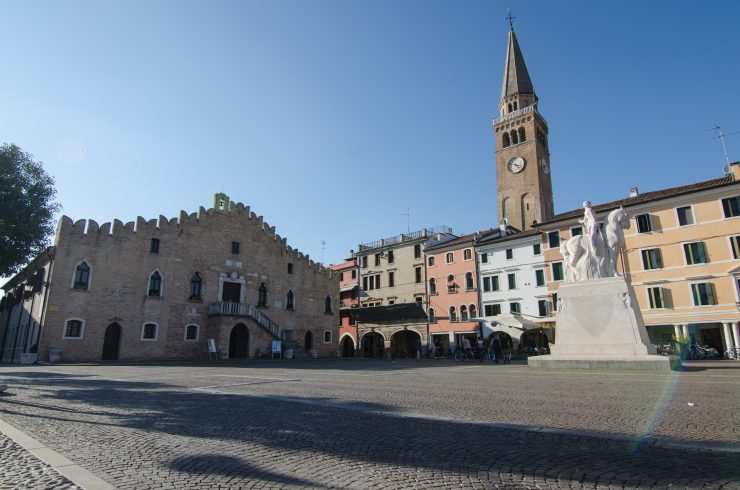
Make your way to the unique Town Hall, easily recognizable by its Ghibelline battlements.
Take a glance at the bell tower — yes, it really is leaning! Then continue on to the Molini di Sant’Andrea, the most romantic corner of all Portogruaro:
the buildings reflect in the green waters of the Lemene River, while the sound of water flows through the mill wheels.
For information about guided visits to the Town Hall and the mills, we recommend checking the official city website: Comune di Portogruaro.
Every Thursday morning, the historic center hosts the local market — a perfect opportunity if you’re planning your visit. By the time lunch (or at least aperitivo hour!) rolls around, stop by one of the wine bars in the old town to enjoy a Spritz or a glass of local wine in an authentic setting. Near Porta San Giovanni, you’ll find the tavern “A l’ombra de la tore”, a great place to grab a bite to eat.
Info & reservations: +39 0421 71080, this venue is affliated with the Europacard.
After a good coffee, you’re ready to continue exploring the town. Starting from the mills, follow the pedestrian path along the river, and you’ll reach the Museo Archeologico Concordiese (Via Seminario 26, phone: +39 0421 72674), which houses many of the artifacts uncovered during the excavations in Concordia Sagittaria.
If you feel like you’ve had your fill of history for the day, head to the Parco della Pace, the town’s public park just a short walk away. Relax in the shade of the trees while the kids enjoy the swings and playground.


Summaga
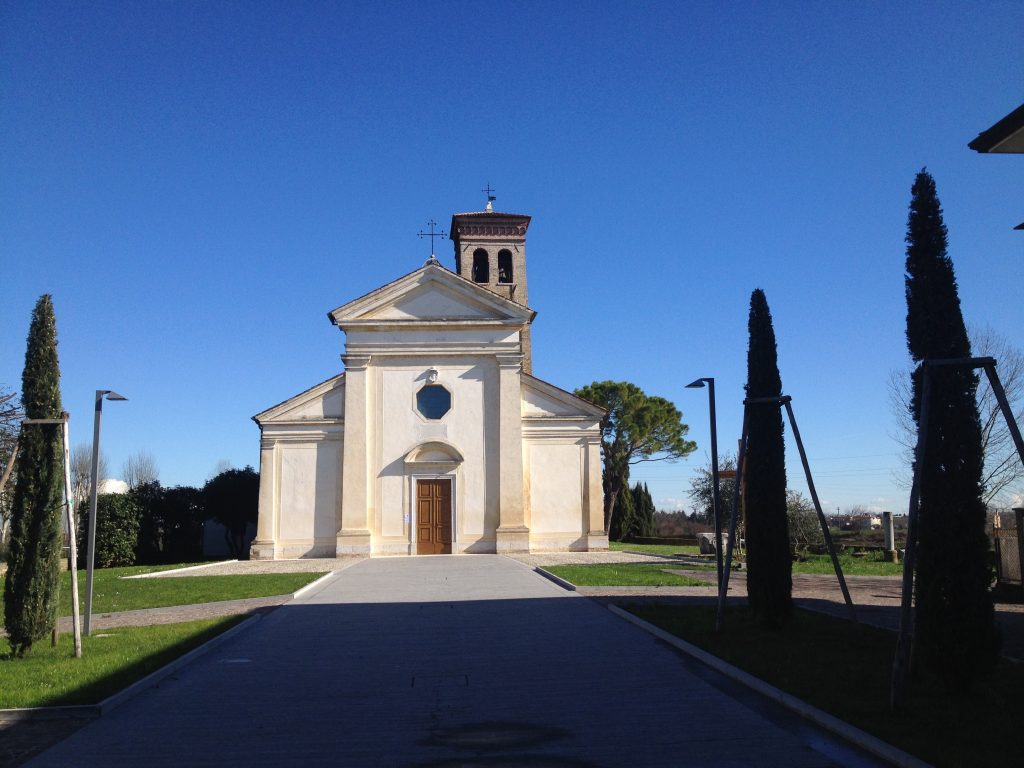
Recharged and ready? Hop back in the car and head to Summaga, a small hamlet nestled in the countryside. Amid the fields, you’ll discover a true hidden gem: a Benedictine abbey dating back to the 11th century.
Park near the church and get ready to step inside — it’s absolutely worth it.
Look up and let yourself be captivated by the frescoes that have withstood the test of time.
Legend has it that the abbey’s history is somehow linked to the Knights Templar…
Who knows what stories these walls and columns would tell if only they could speak?
Road of the DOC wines of Lison-Pramaggiore
Just a few more kilometers by car, and you’ll find yourself in a region famous for its DOC wine production. You’ve probably already noticed the endless rows of vineyards dotting the landscape. The triangle formed by the towns of Lison, Pramaggiore, and Annone Veneto is renowned for its red wines (such as Cabernet and Merlot) and white wines (including Verduzzo and Tai).
In the center of Pramaggiore stands a large rectangular building: the National Wine Exhibition, an institution showcasing wines from wineries all over Italy. Every year, it also hosts the awards ceremony for the best local wines.
For an even more authentic experience, take the Lison-Pramaggiore DOC Wine Route and stop at one of the many wineries in the area for a tasting. But be careful not to overdo it — you’ll still need to drive back to the beach where your trip began!
A friendly tip? Buy a few bottles to take home and savor the taste of this land whenever you want.
For information about wineries open for tastings or where to buy wines, you can find a complete list at www.stradadeivini.it.
Credits Valentina Paro, Diarioinviaggio.it
 Redazione Etgroup


Add comment